HDB · Sin Ming
Sin Ming HDB — Five Freestanding Pieces Instead of Built-Ins
Not every flat needs built-ins. This Sin Ming commission was five separate pieces — sized to the rooms, finished like fitted carpentry, but able to leave with the owner.
Freestanding storage — 5 pieces · Workshop fabrication, single-day install · S$3,130 for all five pieces
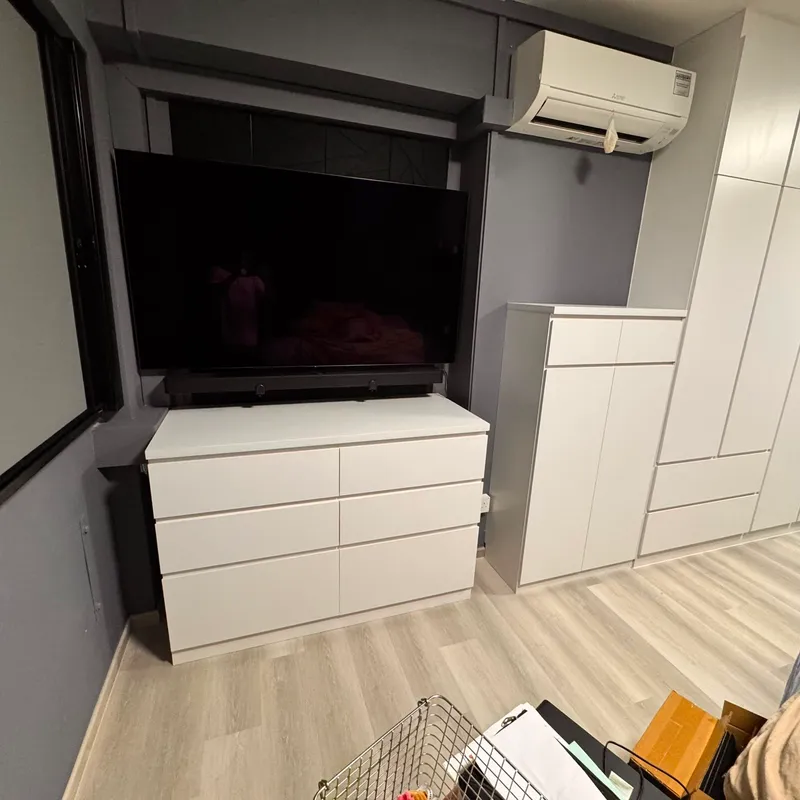
Bedroom with a white six-drawer chest below a wall-mounted TV, two-door cabinet and wardrobe run alongside — Sin Ming HDB freestanding carpentry
Most carpentry commissions in Singapore end up fitted: scribed to the wall, filled at the edges, screwed down and permanent. This Sin Ming HDB job went the other way. Five pieces, all freestanding, all built to the same standard as fitted work — but able to be picked up and carried out.
What was built, and what each piece cost
| # | Piece | Finish | Cost |
|---|---|---|---|
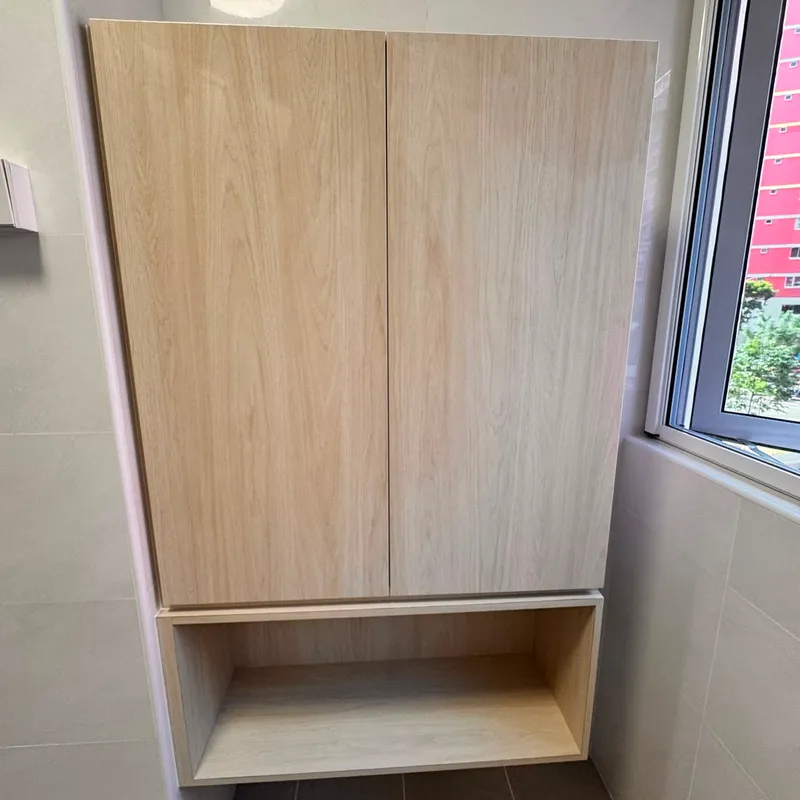
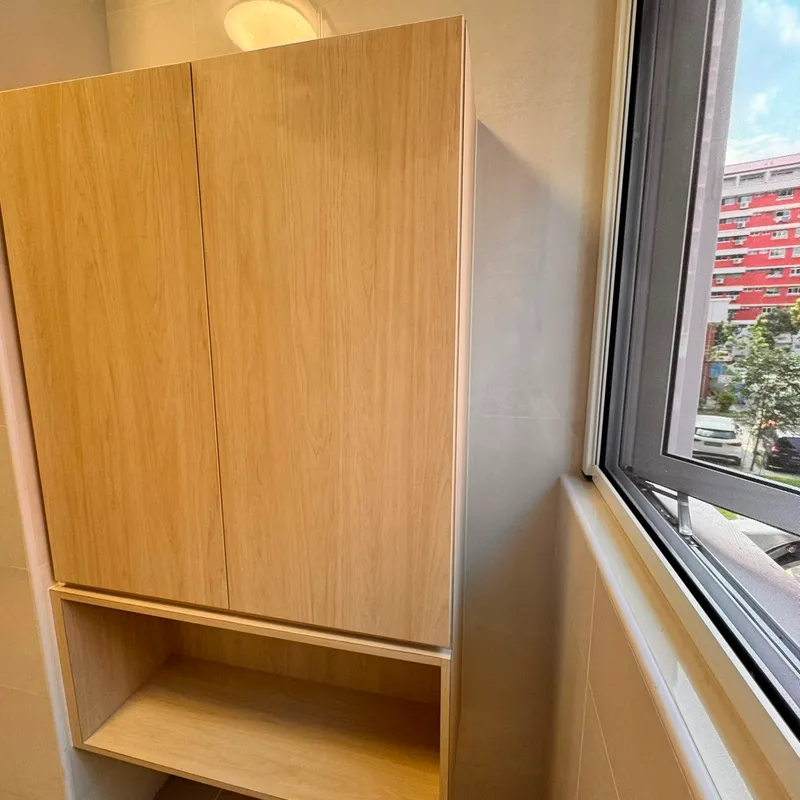
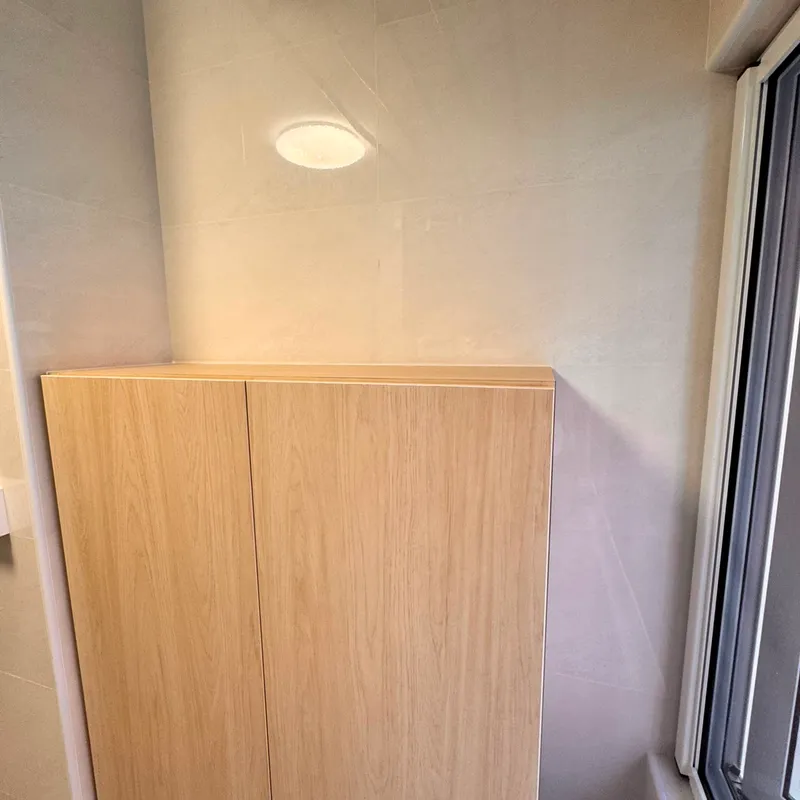
| 1 | Service yard wall cabinet — 2 doors, open shelf below | Wood-grain laminate (SQ1725T) | S$580 |
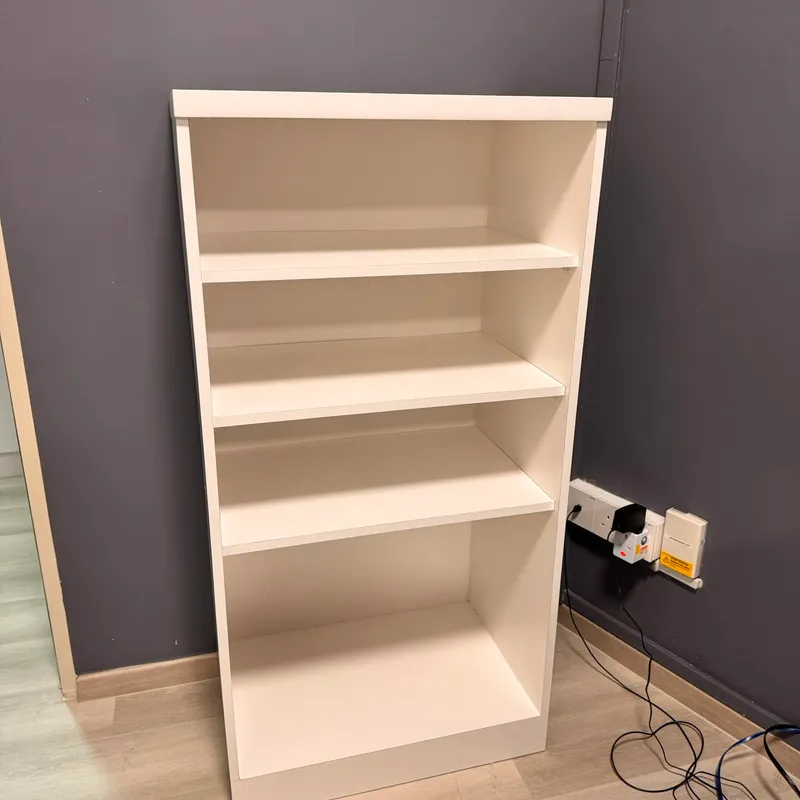
| 2 | Open bookshelf — adjustable shelves | White | S$530 |
| 3 | Six-drawer chest | White | S$1,020 |
| 4 | Two-door cabinet | White | S$600 |
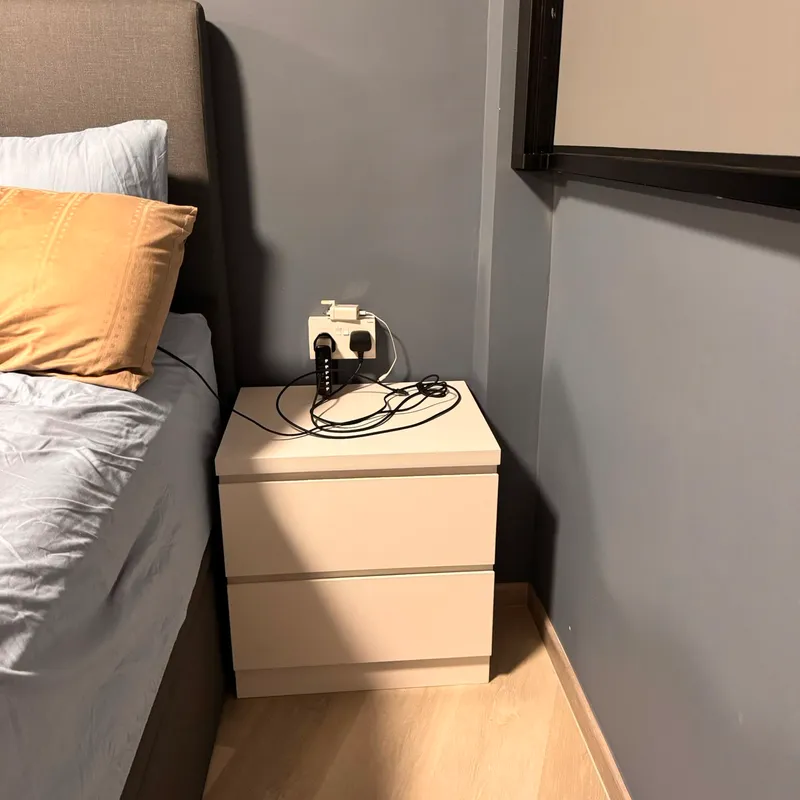
| 5 | Two-drawer bedside unit | White | S$400 |
| Total | S$3,130 |
Those are the actual figures from the job sheet, not a range. Four of the five pieces are white; the yard cabinet is the one wood-grain item, because it lives in a tiled space where a flat white box would have looked like an appliance.
Why freestanding, and when it's the right call
Built-in carpentry wins on fit. It follows an out-of-square wall, runs floor-to-ceiling with no dust gap, and uses every millimetre of an awkward corner. That's real, and for a kitchen or a wardrobe run it usually justifies itself.
But it comes with two costs people underweight:
- It stays with the flat. Built-ins are fixtures. When you sell, they're part of the property. Five years of use, then it belongs to someone else.
- It's priced for the fitting, not just the box. Scribing, filler panels, levelling, permanent fixing — that labour is a real share of a built-in quote, and it buys you fit rather than storage.
Freestanding inverts both. You give up the last few centimetres and the seamless line, and in exchange the pieces are cheaper for the same capacity and they're yours to move. For this flat — where the layout wasn't settled and the owner wanted the option to rearrange — that was the better trade.
The service yard cabinet
The one piece that is wall-mounted. Service yards are the most under-built space in a Singapore flat: usually a washing machine, a drying rack, and nothing else, with cleaning supplies stacked on the floor because there's nowhere to put them.
Three things drove this build:
- Two doors above, open shelf below. Closed storage for detergent and tools; the open shelf takes anything that comes in wet and needs to breathe. Putting damp items behind a door in an unventilated yard is how you get mildew.
- Mounted to clear the drying rack. The ceiling rack keeps its full drop. The cabinet had to sit at a height where a full load of laundry still hangs clear.
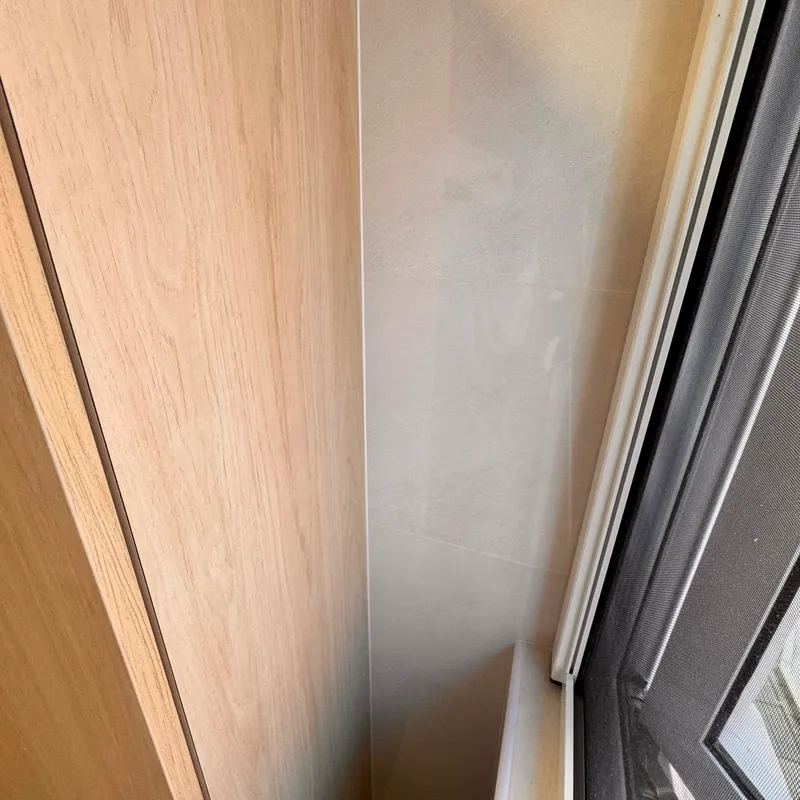
- Fixed into tile. Yard walls are tiled, so the anchor has to go through glazed tile into the substrate behind without cracking the glaze. A yard cabinet loaded with liquid detergent is heavier than it looks, and the fixing is the only thing carrying it.
Yard carpentry isn't just indoor carpentry relocated. The space is unconditioned, humid, and periodically wet, so the substrate and edge sealing matter more than the finish does.
The bedroom pieces
The six-drawer chest is the largest item in the set and sits under the wall-mounted TV, doing the job a built-in TV console would normally do — without being tied to that wall forever. Drawers run on proper soft-close runners; on a chest this wide, cheap runners sag within a year once the drawers are actually loaded.
The two-door cabinet next to it and the bedside unit share the same carcass construction and white finish, so the three pieces read as one family rather than three separate purchases. That's the part freestanding furniture usually gets wrong — bought separately, from different places, in finishes that nearly match. Building them together in one run avoids it.
What this approach doesn't do
Being straight about it: freestanding won't give you a floor-to-ceiling wardrobe wall with no gaps. It won't wrap a corner seamlessly. In a genuinely tight room, the 20–40mm you concede around each piece is space you don't get back.
If the layout is final, the walls are the walls, and you're staying — build in. If any of those is uncertain, this is the better-value route, and nothing about the finish has to be a compromise.
Thinking about something similar?
Send a photo of the space and rough dimensions, and we'll tell you honestly whether freestanding or built-in serves you better for that particular wall.
WhatsApp Alan with your space.
For the full comparison, see freestanding vs built-in carpentry. For yard-specific guidance, see the service yard cabinet guide. Broader pricing sits on the pricing page.
Photographs
More from this build.
Want a build like this?
Real quote within 24 hours.
WhatsApp Alan with your floor plan and a few reference photos. Site visit and quote are free, no deposit until you sign off on the 3D mock-up.