Decision Guide
Freestanding vs Built-In Carpentry in Singapore — Which Is Actually Worth It
Built-ins are fixtures — they stay with the flat when you sell. Freestanding pieces are furniture. That single difference decides more renovations than fit ever does.
20 August 2026 · 8 min read · Updated 20 August 2026
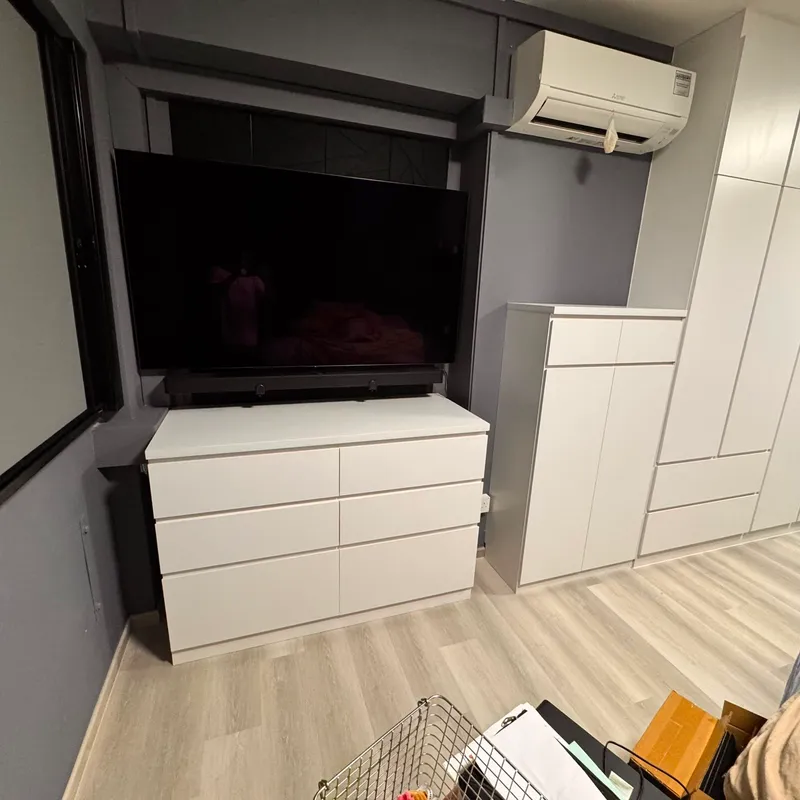
White six-drawer chest and two-door cabinet standing freestanding in a Sin Ming HDB bedroom beside a fitted wardrobe run
There is a decision most Singapore homeowners make by default rather than on purpose: whether their carpentry is fixed to the flat or furniture that can leave with them.
Almost everyone defaults to built-in, because that is what renovation quotes assume. For a lot of flats it is the wrong default.
The comparison
| Built-in | Freestanding | |
|---|---|---|
| Cost, same footprint | Baseline | Roughly 15–30% less |
| Fit to irregular walls | Scribed — no gap | Consistent shadow gap |
| Floor-to-ceiling | Yes, no dust gap | Not without a visible gap |
| Moves house with you | No — it is a fixture | Yes |
| Suits a rental | No | Yes |
| Install time on site | Longer — scribing and fitting | Usually one day |
| Reconfigure later | No | Yes |
| Best for | Kitchens, wardrobe walls, awkward corners | Chests, bedsides, shelving, consoles |
Where the price difference actually comes from
A built-in quote is not just a box plus a markup. It contains labour a freestanding piece never needs:
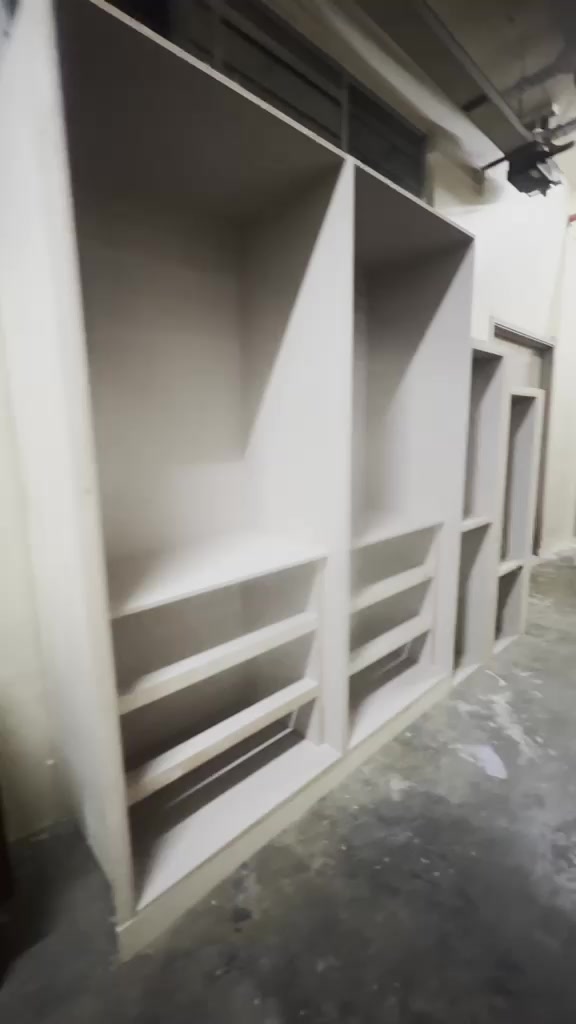
- Scribing. Walls in Singapore flats are not straight or square. Making a carcass sit flush against one means cutting a matching profile into its edge — slow, skilled, done on site.
- Filler and end panels. The strips that close the gaps a carcass cannot. More material, more cutting, more fitting.
- Levelling and permanent fixing. Packing a unit level on an uneven screed and anchoring it into the structure.
None of that adds storage. All of it buys fit. That is a real thing to buy — but you should know that is what you are paying for.
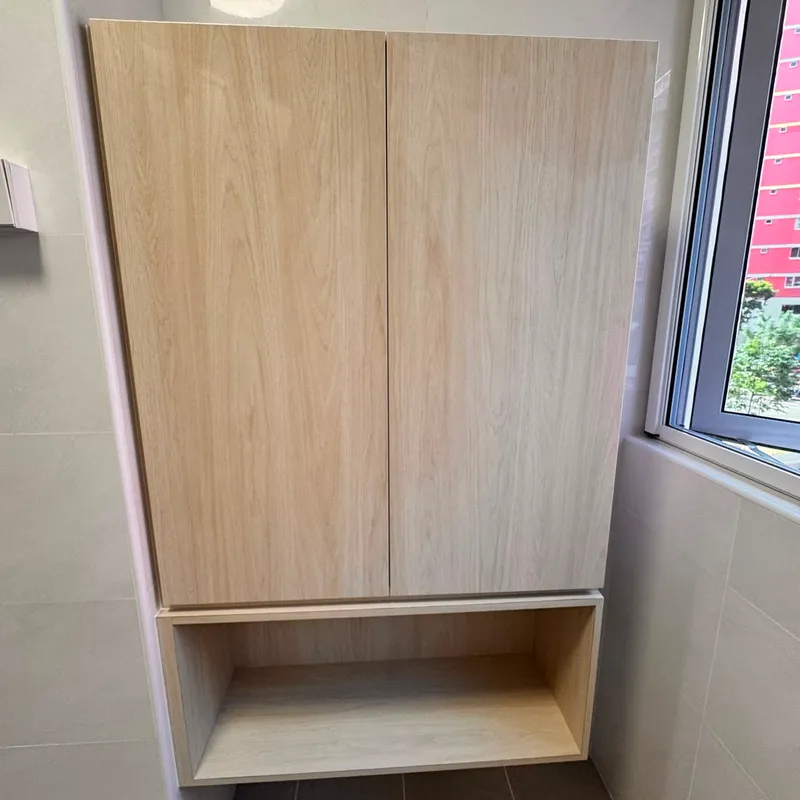
A recent Sin Ming HDB commission of five freestanding pieces came to S$3,130 total: service yard cabinet S$580, open bookshelf S$530, six-drawer chest S$1,020, two-door cabinet S$600, bedside unit S$400. Equivalent built-ins would have cost meaningfully more and could not have moved.
The argument nobody makes clearly
Built-in carpentry is a fixture. When you sell the flat, it belongs to the buyer.
That is not a technicality — it is the whole financial picture. Five, ten years of use, then it stays behind. And it rarely comes back to you at sale: buyers price an HDB flat on location, size, lease remaining and condition. Your wardrobe wall is a bonus if they like it and a removal cost if they do not.
So the honest way to think about built-ins: money spent on living well now. Not an investment. If that is clear and you still want it, build in — plenty of people should. Just do not tell yourself you will get it back.
Two situations where this flips the decision outright:
- Renting. Built-ins mean paying to permanently improve a property you do not own. Unless the landlord is contributing in writing, do not.
- Short horizon. If the flat is a five-year stop before upgrading, freestanding pieces move with you and the money is not written off.
When built-in is clearly right
Being fair to the other side — built-in genuinely wins here:
Kitchens. Almost always. Worktop, sink, hob and appliances have to be integrated, and the run has to be continuous and sealed. Freestanding kitchen carpentry is a niche look, not a default.
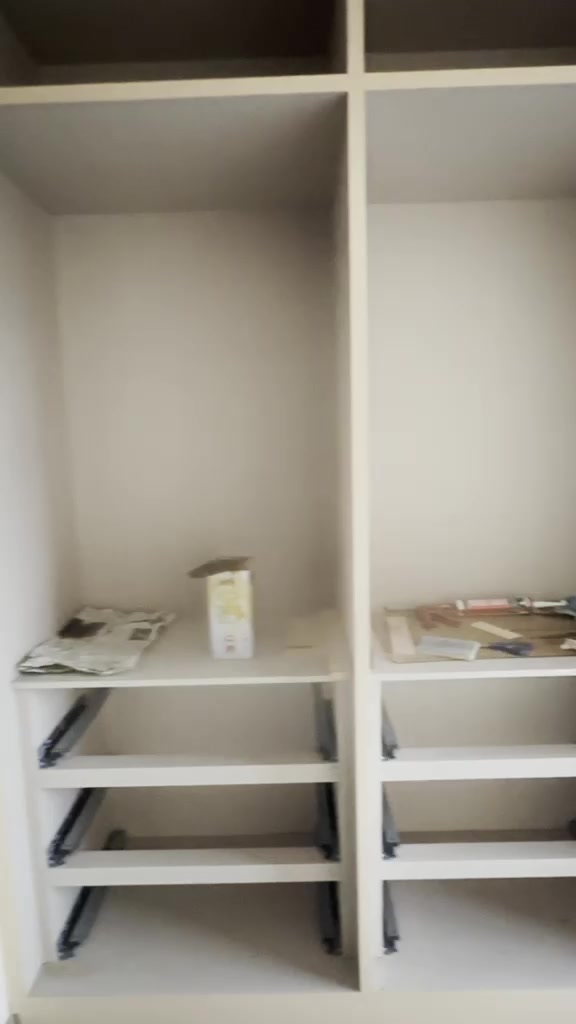
Floor-to-ceiling wardrobe walls. If you want no dust gap above and no wasted strip at the top, it has to be built in. The top shelf of a full-height wardrobe is genuine long-term storage.
Awkward geometry. Under a stair, into a bay, around a structural column, into a recess narrower at one end. No freestanding piece follows that.
Very tight rooms. In a small bedroom, the 20–40mm you concede around each freestanding piece is space you actually feel.
You are settled. Long-term home, layout resolved, no plans to move. Then fit is worth paying for, and permanence is not a cost.
The mistake that makes freestanding look cheap
Freestanding gets its reputation from being bought rather than built — a chest from one shop, a bedside from another, a shelf from a third, in three finishes that nearly match but do not.
Custom freestanding is a different thing. The Sin Ming pieces share one carcass construction, one white finish, and one hardware spec across the set, so they read as a family. The yard cabinet is the only piece in a different finish, and that is deliberate — it lives in a tiled utility space where a white box would have looked like an appliance.
Built together in one run, freestanding does not look like a compromise. Bought piecemeal, it always does.
How to decide
Three questions:
- Will you still be in this flat in seven years? No, or unsure → freestanding.
- Does the piece have to follow an irregular wall or run to the ceiling? Yes → built-in.
- Is it a kitchen? Yes → built-in.
Everything else is preference, and most homes are best served by mixing: build in where fit genuinely pays, go freestanding everywhere else, and have the same workshop do both so the finishes match.
Not sure which applies to your space?
Send a photo of the wall and rough dimensions, and we will tell you which way we would build it — including when the answer is the cheaper one.
WhatsApp Alan with your space.
Related: interior designer vs direct carpenter covers who manages the work; the carpentry hardware guide covers what actually determines how long either option lasts.

Written by
Alan Chew
Founder & Master Carpenter · TOKTOKTOK
Alan founded TOKTOKTOK Carpentry Singapore in 2020 and has personally led 200+ HDB, condo, and landed carpentry builds across the island — handling every project from first measurement to final handover. More about Alan →
Ready to build?
Get a real quote for your project.
Share your floor plan and a few reference photos. Real quote in writing within 24 hours, no commitment.